
Discover the Montessori Toy Benefits: Nurturing Growth Through Play

Raising children is a journey filled with wonder, challenges, and countless moments of discovery. As a parent or educator, I have always sought ways to support a child’s natural curiosity and development with intention and care. One approach that has deeply resonated with me is the Montessori philosophy, especially through the use of thoughtfully designed toys. These toys are not just playthings; they are tools that encourage independence, creativity, and learning at every stage of childhood.
In this post, I want to share the many benefits of Montessori educational toys and how they can enrich the lives of children from babies to school-age. I will also explore what makes these toys unique and offer practical advice on choosing the right ones for different developmental milestones.
The Montessori Toy Benefits: Why They Matter
Montessori toys are crafted with a clear purpose - to support a child’s development in a natural and respectful way. Unlike many mass-produced toys that often overwhelm children with flashing lights and sounds, Montessori toys invite calm, focused play. Here are some key benefits I have observed and experienced:
Encouraging Independence: Montessori toys are designed to be accessible and manageable for children. This means a toddler can pick up a wooden puzzle and work on it without constant adult help, fostering a sense of accomplishment and self-reliance.
Promoting Fine Motor Skills: Many Montessori toys involve activities like stacking, sorting, or threading, which help develop hand-eye coordination and dexterity. These skills are foundational for writing and other daily tasks.
Stimulating Cognitive Development: Through open-ended play, children learn problem-solving, spatial awareness, and cause-and-effect relationships. For example, a set of wooden blocks can become anything a child imagines, encouraging creativity and critical thinking.
Supporting Sensory Exploration: Natural materials like wood, cotton, and wool provide rich sensory experiences. The texture, weight, and temperature of these materials engage a child’s senses more deeply than plastic alternatives.
Fostering Emotional Growth: Montessori toys often encourage patience and concentration. Children learn to focus on a task, experience the joy of mastery, and develop resilience when faced with challenges.
These benefits align beautifully with mindful parenting, where the goal is to nurture a child’s whole being with respect and intention.
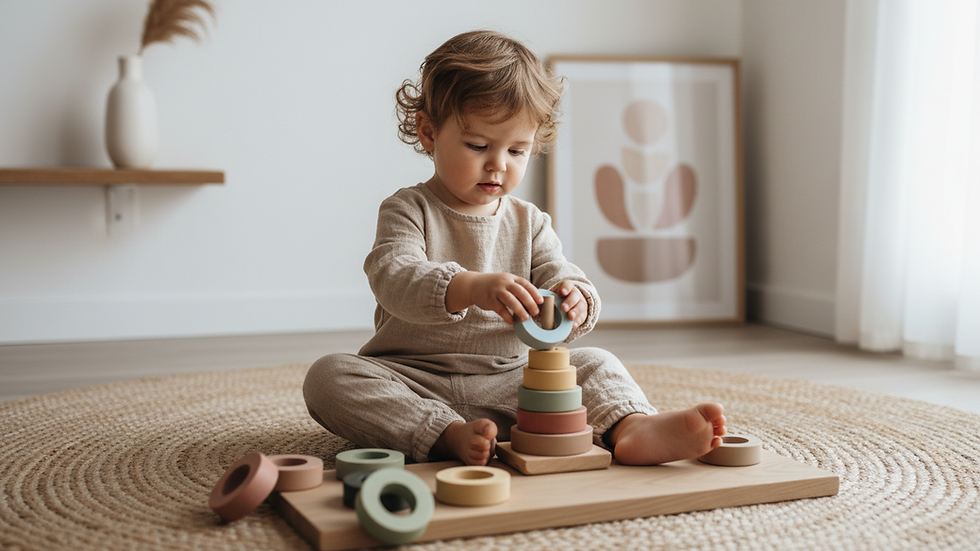
What Are Considered Montessori Toys?
Understanding what qualifies as a Montessori toy can help you make informed choices. Montessori toys are not just any educational toys; they follow specific principles that align with the Montessori method:
Simplicity and Purpose: Toys are simple in design, avoiding unnecessary distractions. Each toy has a clear educational purpose, such as teaching shapes, colours, or practical life skills.
Natural Materials: Most Montessori toys are made from wood, cotton, metal, or other natural materials. This choice supports sensory development and sustainability.
Open-Ended Play: These toys encourage creativity and imagination. For example, wooden blocks can be stacked, sorted, or used to build structures, allowing children to explore in their own way.
Self-Correcting Features: Many Montessori toys include elements that allow children to identify and correct their own mistakes, fostering independence and problem-solving.
Age-Appropriate Design: Toys are carefully selected to match the developmental stage of the child, from grasping toys for babies to more complex puzzles for school-age children.
Examples of classic Montessori toys include:
Sensorial materials like colour tablets and sound cylinders
Practical life tools such as child-sized brooms or pouring sets
Mathematical materials like number rods and bead chains
Language materials including sandpaper letters and movable alphabets
Choosing toys that fit these criteria ensures that playtime is both enjoyable and deeply enriching.

Tailoring Montessori Toys to Developmental Milestones
One of the joys of Montessori toys is how well they can be matched to a child’s growth. Here’s a guide to selecting toys based on age groups and developmental needs:
Babies (0-1 years)
At this stage, babies are exploring the world primarily through their senses. Toys should be safe, tactile, and encourage grasping and reaching.
Soft wooden rattles or rings
Simple stacking toys with large pieces
Textured balls or fabric books
These toys support sensory development and hand-eye coordination.
Toddlers (1-3 years)
Toddlers are developing motor skills and beginning to understand cause and effect. Toys that encourage movement and problem-solving are ideal.
Shape sorters and nesting cups
Simple puzzles with knobs
Practical life sets like pouring or spooning activities
These help toddlers build independence and fine motor skills.
Preschoolers (3-6 years)
Preschoolers are ready for more complex challenges that stimulate cognitive and language development.
Counting beads and number rods
Sandpaper letters and phonetic games
Building blocks and pattern boards
These toys support early literacy, numeracy, and creativity.
School-Age Children (6-12 years)
Older children benefit from toys that encourage abstract thinking, concentration, and practical skills.
Advanced puzzles and brain teasers
Science kits and nature exploration sets
Art and craft materials made from natural fibres
These foster problem-solving, curiosity, and self-expression.
By thoughtfully selecting toys that align with these milestones, we can support children’s growth in a holistic and joyful way.
How Montessori Toys Support Mindful Parenting
Incorporating Montessori toys into daily life is not just about the toys themselves but about the approach to parenting and education they encourage. These toys invite us to slow down, observe, and respect each child’s unique pace and interests.
Creating a Prepared Environment: Setting up a child-friendly space with accessible toys encourages autonomy. Children learn to choose activities that interest them and take responsibility for tidying up.
Encouraging Focus and Patience: Montessori toys often require concentration and gentle repetition. This helps children develop attention spans and a love for learning.
Valuing Quality Over Quantity: Investing in a few well-made, natural toys rather than many plastic ones reduces clutter and supports sustainability.
Building Emotional Connection: Playing alongside children with these toys fosters meaningful interactions and strengthens bonds.
In my experience, this mindful approach transforms playtime into a nurturing and empowering experience for both child and adult.
Embracing Natural Materials for a Healthier Childhood
One of the most beautiful aspects of Montessori toys is their use of natural materials. This choice reflects a deep respect for the environment and the child’s sensory world.
Wood: Warm to the touch and durable, wooden toys offer a tactile richness that plastic cannot match. They age gracefully and often become cherished heirlooms.
Cotton and Wool: Soft fabrics used in dolls, balls, or sensory toys provide gentle textures that soothe and engage.
Metal and Glass: Used sparingly, these materials introduce new sensory experiences and teach children about different textures and weights.
Natural materials are also free from harmful chemicals often found in synthetic toys, making them safer for young children who explore with their mouths.
Choosing toys made from these materials aligns with eco-conscious values and supports a healthier, more mindful childhood.
Exploring the world of Montessori toys has been a rewarding journey for me, offering a way to nurture children’s growth with intention and love. If you are looking to enrich your child’s playtime with meaningful, developmentally appropriate toys, I encourage you to explore the wide range of montessori educational toys available. These toys are more than just objects - they are invitations to learn, create, and grow.
May your journey with your little ones be filled with joy, discovery, and the gentle magic of mindful play.
To display the Widget on your site, open Blogs Products Upsell Settings Panel, then open the Dashboard & add Products to your Blog Posts. Within the Editor you will only see a preview of the Widget, the associated Products for this Post will display on your Live Site.
Start your 14 days Free Trial to activate products for more than one post.
icon above or open Settings panel.
Please click on the


Comments