
Tactile Brainpower: Why Cuddly & Crafty Puzzle Games Beat Screen Time

Ask any parent what visual comes to mind when they hear the term puzzle games, and they will likely describe a child staring intently at a tablet screen, dragging pixelated shapes into virtual slots with the swipe of a tiny finger. In our highly digitized era, it has become second nature to rely on apps to challenge our kids' minds. The promise of virtual rewards, points, and animations is tempting. But child development experts are noticing a critical gap: when play lacks physical dimension, children miss out on the rich, multi-sensory feedback required for deep cognitive growth. The truth is, the most transformative logic-building experiences happen in the physical world, where hands and minds collaborate to solve tangible challenges.

Let’s explore why high-quality, physical puzzle games and natural brain-teasers remain the ultimate training ground for problem-solving, resilience, and early spatial intelligence.
The Physics of Play: Real Spatial Reasoning
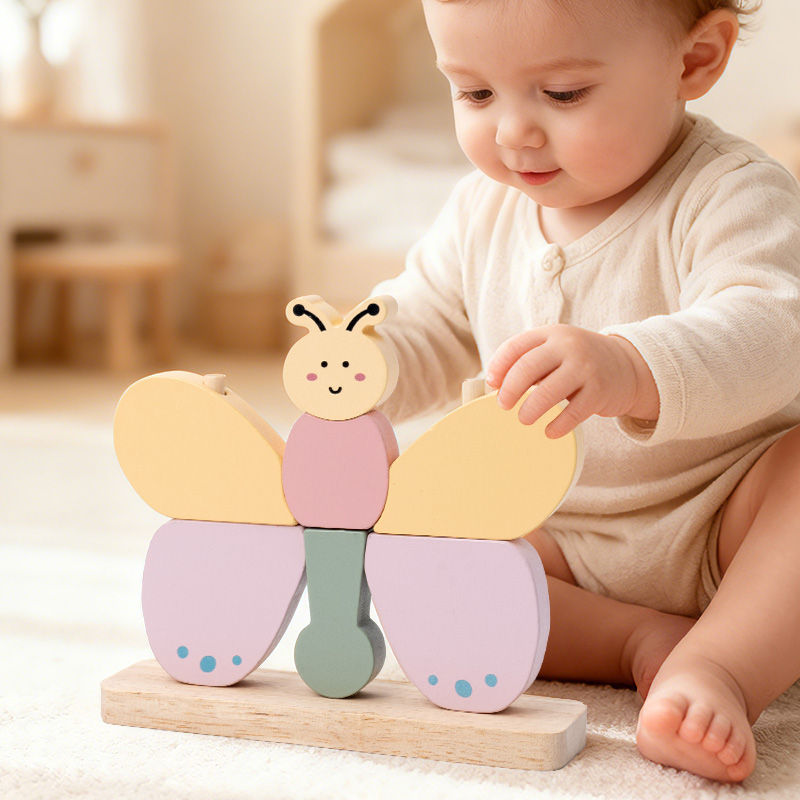
On a screen, the laws of gravity, weight, and friction don't exist. If a piece is slightly misaligned on a tablet, it often snaps into place automatically. Physical toys for toddlers, however, require authentic physical mastery. When a child plays with a physical puzzle or block stacking set, they must evaluate natural spatial boundaries:
Spatial Rotation: Physically turning, flipping, and angling a piece to see if it meets its match.
Fine Motor Adjustment: Controlling small hand muscles to apply the exact pressure needed to fit a solid piece into a snug space.
Depth Perception: Exploring three-dimensional limits, learning about boundaries, balance, and volume through direct touch.
This hands-on feedback is the foundation of geometric thinking and early scientific logic, teaching young brains how physical objects interact in the real world.
Emotional Grit Through Natural Resilience
In digital environments, incorrect moves are met with loud sound effects, visual alerts, or instant reset buttons. This can breed a low tolerance for mistakes and generate high levels of frustration when digital dopamine loops are interrupted.
Physical puzzle games offer a far gentler, natural form of feedback. When a piece doesn’t fit, it simply doesn't fit. Working through these moments of trial and error with tactile materials helps children build emotional self-regulation and patience. When that final piece finally clicks into place, the sense of autonomous achievement and pride is genuine—fostering self-trust that digital praise cannot replace.
How Intentional Puzzle Games Drive Early Skills Development ?
Parents often ask how to translate quiet play into lasting growth. Choosing natural, open-ended materials is the best way to keep children engaged while maximizing their learning.
Integrating screen-free puzzle games and logic puzzles into daily life supports essential milestones:
Data Categorization: Grouping items by color, size, or pattern helps toddlers understand sets and relationships, which are early precursors to mathematical logic.
Logical Deductions: Evaluating the whole picture to make informed decisions teaches children how to tackle large, complex tasks step-by-step.
Deep Cognitive focus: Free from flashing notifications and auto-advancing levels, physical sets invite quiet, prolonged concentration, naturally lengthening your child's attention span.
The Lasting Value of Tactile Materials
Natural wood offers sensory-rich, calming feedback. It has variable grain, warmth, and organic density, which makes the tactile act of solving a puzzle deeply grounding. Unlike identical, artificial plastic surfaces, these unique natural materials keep toddlers calmly focused on their goals.
Conclusion: Let Them Discover Piece by Piece
Nurturing an analytical mind doesn’t require high-tech gimmicks or expensive electronic screens. By introducing beautifully made, screen-free puzzle games, you provide your child with something far more potent: the tools, patience, and independent confidence needed to solve life’s challenges, one piece at a time.
Want to encourage screen-free problem solving in your home? Explore our signature collection of sustainable, non-toxic puzzle games and hand-crafted logic puzzles designed to make critical thinking feel like pure play.
To display the Widget on your site, open Blogs Products Upsell Settings Panel, then open the Dashboard & add Products to your Blog Posts. Within the Editor you will only see a preview of the Widget, the associated Products for this Post will display on your Live Site.
Start your 14 days Free Trial to activate products for more than one post.
icon above or open Settings panel.
Please click on the


Comments